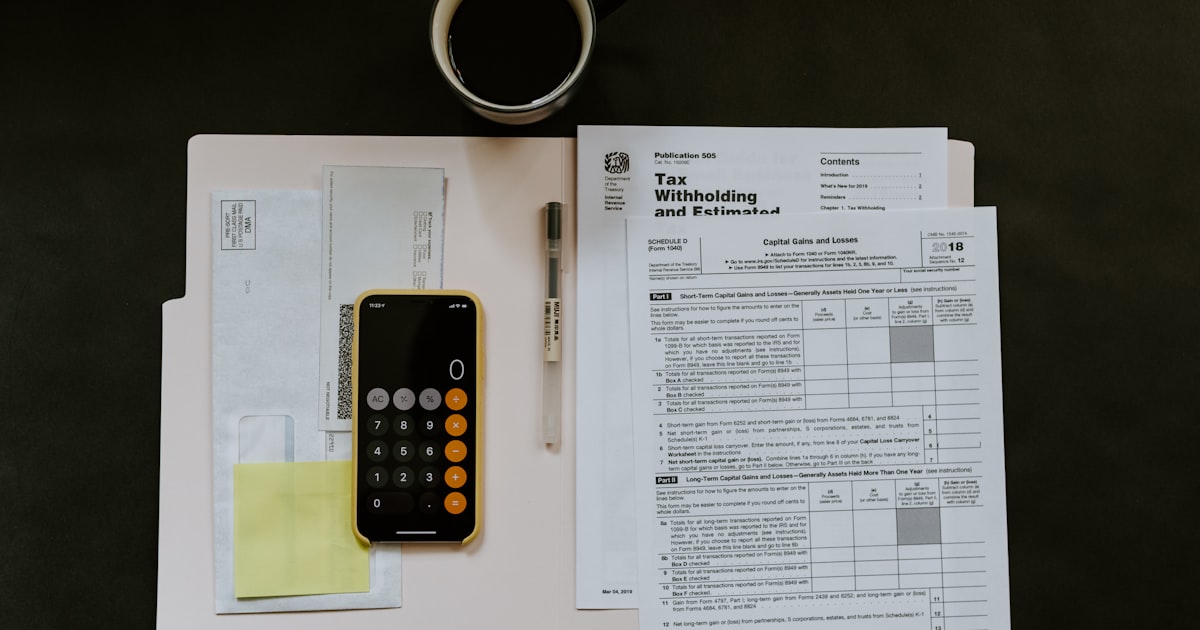

Rental income in Australia is assessable income — you must declare it, and you pay tax on the net amount after allowable deductions. Understanding how this works is one of the most important skills a property investor can develop, because the difference between a good and bad tax strategy can be worth thousands of dollars each year. This guide covers everything: what to declare, what you can deduct, how negative gearing works, and how depreciation reduces your tax bill.
What You Must Declare as Rental Income
The ATO requires you to declare all income derived from your rental property. This includes: weekly or monthly rent payments, advance rent (rent paid ahead of time must be declared in the year received), bond money retained after the tenancy ends (if kept as compensation for rent or damage), insurance payouts for loss of rent, and any other amounts received in connection with renting the property. It does not include the bond itself while it’s held — only bond amounts you actually keep. If you rent the property short-term via Airbnb or Stayz, all income is still assessable. The ATO can access data directly from these platforms.
Allowable Deductions Against Rental Income
You can deduct expenses that are directly related to earning rental income and incurred in the income year. The main deductions include:
- Loan interest — interest on your investment loan (not principal repayments)
- Property management fees — typically 7–10% of rent collected
- Council rates, water rates, and land tax
- Building and landlord insurance
- Repairs and maintenance — to restore the property to its original condition
- Advertising costs — for finding tenants
- Body corporate/strata fees
- Accounting fees — for preparing your rental schedule
- Travel expenses — strictly limited since 2017; generally not deductible for residential properties
- Depreciation — on the building structure and fixtures (see below)
Negative Gearing Explained
Negative gearing occurs when your deductible rental expenses exceed your rental income — resulting in a net rental loss. Under Australian tax law, this loss can be offset against your other assessable income (such as salary), reducing your overall tax bill. If you earn $120,000 in salary and have a $10,000 net rental loss, you’re taxed on $110,000 instead. At a 37% marginal rate, that’s a $3,700 tax saving. Negative gearing is most valuable to investors in higher tax brackets — someone on 19% gets less benefit than someone on 45%. Note: if you have no other income to offset against, the loss is carried forward to future years.
Depreciation: The Silent Tax Saver
Depreciation is a non-cash deduction — you claim it without spending a dollar in the tax year. There are two types: Division 43 (capital works deduction on the building structure itself — 2.5% per year on construction cost for properties built after July 1985) and Division 40 (plant and equipment — items like ovens, carpet, hot water systems, air conditioning, depreciated over their effective life). A Quantity Surveyor prepares a Tax Depreciation Schedule (cost: $400–$700, fully deductible) that lists every claimable item. For a newly built property worth $500,000 (with $300,000 in construction cost), Division 43 alone can generate $7,500 in annual deductions for 40 years.
Repairs vs Capital Improvements: A Critical Distinction
This is one of the most common areas of confusion for landlords. A repair restores something to its original condition and is fully deductible in the year incurred. A capital improvement improves the property beyond its original condition and must be depreciated over time (not immediately deducted). Examples: fixing a broken window = repair (deductible). Replacing a single-pane window with double-glazed = improvement (capitalised). Repainting a room = repair (deductible). Adding a pergola = improvement (Division 43). Get this wrong and the ATO may disallow your deduction in an audit.
How to Report Rental Income in Your Tax Return
Rental income and expenses are reported in the “Rental” section of your individual tax return (MyTax or via a tax agent). You’ll need: total rental income received, a full breakdown of all deductible expenses, your depreciation schedule figures, and the number of days the property was rented vs available for rent. If the property was only available to rent for part of the year (e.g. you used it personally for two weeks), you must apportion deductions accordingly. Using a tax agent experienced in property investment is strongly recommended — their fee is deductible and they typically identify deductions that more than cover their cost.
PAYG Withholding Variation: Get the Benefit Now
Most investors wait until their tax return to receive their negative gearing benefit. But if you’re an employee with a negatively geared property, you can apply for a PAYG Withholding Variation from the ATO. This adjusts the tax your employer withholds each pay period so you receive the tax benefit throughout the year — improving your cash flow immediately rather than waiting for a lump sum refund in July. Apply via the ATO’s online services or through your accountant. It’s recalculated each year and should be updated if your circumstances change.
Rental tax is not just a compliance obligation — it’s a lever that can materially improve your investment returns. Claim every legitimate deduction, get a depreciation schedule on every property, and consider a PAYG variation so you’re not waiting months for cash flow relief. A good accountant pays for themselves many times over.
One Property at a time
Brick by Brick 🧱
General Advice Warning: This article is general in nature and does not constitute personal financial advice. Please consult a licensed financial adviser before making investment decisions.