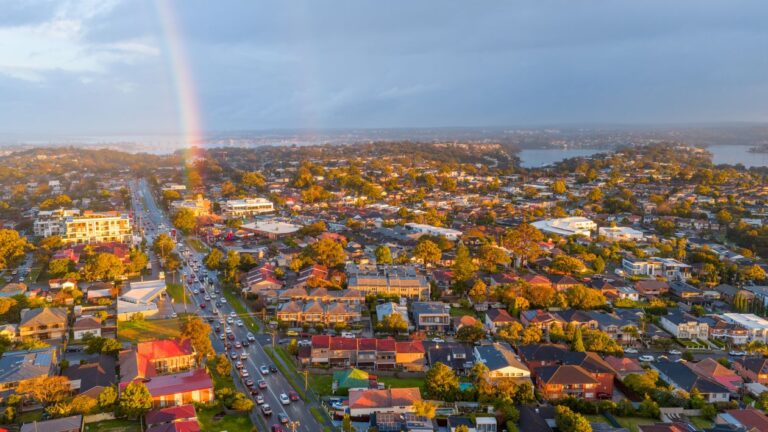

Darwin is unlike any other Australian capital city investment market. It’s smaller (population ~150,000), more volatile, and more dependent on government and defence spending than any mainland capital — but it also consistently delivers gross rental yields that southern investors can barely imagine. In 2026, Darwin offers a compelling mix of very affordable entry prices (among the lowest of any Australian capital), yields regularly above 7%, and a structural tailwind from defence investment that looks set to persist for at least a decade. Here’s the full picture.
Darwin Market Snapshot 2026
Darwin’s property market has had a turbulent history — prices peaked in 2014, fell significantly through 2015–2020, and have partially recovered since 2021. The median house price in Darwin city LGA sits at approximately $480,000–$520,000. Units are a standout value proposition at $270,000–$320,000 — among the cheapest capital city unit prices in Australia. Rental vacancy is tight at 0.8–1.2%, driven by the combination of defence personnel, government contractors, and a tertiary student population (CDU). Gross rental yields for houses average 6.5–8%, with well-positioned units regularly returning 8–10% — figures that are simply not available in any other Australian capital city in 2026.
The Defence Dividend: Darwin’s Biggest Tailwind
The Australian Government’s AUKUS security partnership and the US Force Posture Initiatives have committed billions of dollars to Northern Territory defence infrastructure. RAAF Base Darwin, Robertson Barracks (Palmerston), and the port expansions are all receiving major capital investment. The US Marines rotation through Darwin is permanent and growing — up to 2,500 Marines rotating through annually. This defence activity directly generates housing demand from ADF personnel, US service members, and defence contractors — all on high incomes and with housing allowances. For property investors, the defence effect means: very low vacancy in suburbs near Robertson Barracks and the airport precinct, and strong tenant quality from a government-backed workforce.
Best Suburbs for Investors in Darwin 2026
Palmerston — Darwin’s fastest-growing satellite city, 25km south of the CBD, directly adjacent to Robertson Barracks. ADF housing demand is enormous here. Houses at $420,000–$470,000 returning 8%+ yields. The suburb has significant new estate development but vacancy remains very low. Winnellie and Berrimah — industrial-adjacent suburbs with strong unit yields (8–9%), popular with government contractors and trades workers. Entry prices for units are sub-$280,000. Nightcliff and Rapid Creek — established coastal suburbs with good amenity, professional tenant demand, and yields around 7%. Slightly higher entry prices but stronger long-term capital growth potential. Darwin CBD units — very tight vacancy, good yield (7.5–8.5%), popular with FIFO, healthcare, and government workers. Entry prices $250,000–$320,000.
Risks in the Darwin Market
Darwin’s history includes a severe property downturn — prices fell 30–40% from their 2014 peak. This is a real risk that investors must understand and price in. Key ongoing risks: (1) Small market, high volatility — Darwin’s market can move sharply in either direction. Population is sensitive to government policy and defence posting cycles. (2) Insurance costs — cyclone risk is significant. Insurance premiums in Darwin are among the highest in Australia. Factor this into your yield calculations. (3) Tropical maintenance — heat, humidity, and wet season conditions accelerate property deterioration. Maintenance costs are higher than southern markets. (4) Government dependency — if federal defence spending priorities shift, Darwin’s economy feels it quickly. (5) Tenant quality range — while ADF and government tenants are excellent, Darwin also has a segment of the rental market with higher risk profiles. Strong tenant screening is essential.
Darwin vs Perth: High-Yield Capital City Comparison
Both Darwin and Perth offer capital-city yields well above the national average. Perth (median ~$700,000) delivers yields of 4.5–5.5% — strong by capital city standards but modest compared to Darwin. Darwin delivers 7–9% at entry prices $250,000–$520,000. The trade-off: Perth has a far larger, more liquid market with lower volatility and a more diverse economy. Darwin’s yields are extraordinary but come with genuine risk. For investors who understand the dynamics, Darwin at the right point in its cycle can be transformative for cash flow — particularly at the unit price point where yields above 9% are available.
Darwin is not for every investor — but for those who understand its rhythms and can absorb short-term volatility, the cash flow available here is extraordinary. The defence tailwind is structural, the vacancy is tight, and the entry prices are affordable. Do your homework, factor in insurance and maintenance, and Darwin can be one of the hardest-working assets in your portfolio.
One Property at a time
Brick by Brick 🧱
General Advice Warning: This article is general in nature and does not constitute personal financial advice. Please consult a licensed financial adviser before making investment decisions.