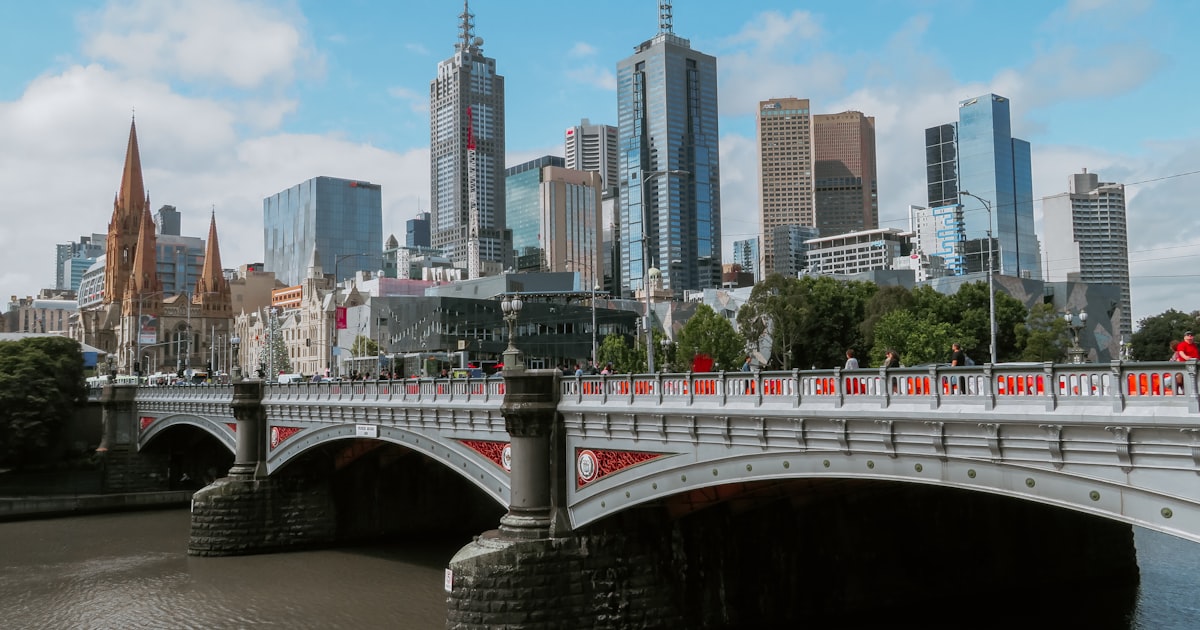

Melbourne is Australia’s second-largest city with a population of approximately 5.3 million. After underperforming Perth and Brisbane from 2021–2024, Melbourne’s market has stabilised in 2025–2026 with selective opportunities emerging — particularly in outer growth corridors where affordability supports both yield and capital growth. For investors, careful suburb selection is essential. This guide covers the best Melbourne investment suburbs in 2026 and what to avoid.
Melbourne Property Market Overview 2026
Melbourne’s median house price sits around $940,000–$980,000 with gross rental yields of 3.0%–4.0% for houses — lower than Perth and Brisbane but typical for a major capital city. The outer growth corridors offer the best yield profile, with entry points of $550,000–$750,000 and yields approaching 4.0%–5.0%. The CBD apartment market remains oversupplied and should generally be avoided by investors. Victoria’s stamp duty is among the highest in Australia — budget approximately $31,000–$55,000 on a $600,000–$1,000,000 purchase.
Melbourne Corridors — Investment Comparison 2026
Outer growth corridor houses offer Melbourne’s best yield for investors in 2026. Werribee, Melton, Craigieburn, and Pakenham all offer entry under $700K with yields approaching 4–5%.
Best Melbourne Suburbs for Investment 2026
Werribee / Hoppers Crossing (Wyndham LGA, south-west): Median $500,000–$650,000, yield 4.0%–5.0%, one of Melbourne’s fastest-growing municipalities. Strong family demand, improving Wyndham Vale rail services, and major employment at the Avalon Airport precinct and Point Cook. Melton / Rockbank (Melton LGA, west): Melbourne’s most affordable metropolitan area, medians under $500,000, yield 4.5%–5.5%, massive population growth from new housing estates. Key risk: 40km from CBD, largely car-dependent. Craigieburn / Mickleham (Hume LGA, north): Growing northern corridor, median $580,000–$650,000, good Ring Road access to employment, family-oriented demand. Pakenham / Officer (Casey LGA, south-east): Train access to CBD, established new housing estates, median $560,000–$640,000, strong family demand. Sunshine / St Albans (inner-west): Gentrification trajectory, median $700,000–$850,000, improving infrastructure with Metro Tunnel and Airport Rail Link uplift, growing professional demand. Coburg / Reservoir (inner north): Established, median $750,000–$950,000, strong professional renter demand, proximity to CBD, consistent capital growth track record. Best for investors with higher budgets prioritising long-term capital defensibility over yield.
What to Avoid in Melbourne
CBD apartment towers (Docklands, Southbank, Melbourne CBD): chronic oversupply, high strata fees that erode yield, difficult resale to owner-occupiers, and international student demand volatility make these poor long-term investments. Student accommodation precincts around Clayton and Box Hill carry exposure to international student visa policy changes. Properties in declining industrial suburbs without genuine gentrification momentum. And for any strata property in Melbourne: always request 3 years of body corporate AGM minutes before purchase — some Melbourne strata schemes carry very high special levies from deferred maintenance.
Melbourne is not a single market — it is a city of suburbs, each with distinct demand drivers, supply characteristics, and price trajectories. The outer corridors offer yield; the established middle ring offers long-term capital defensibility. Know which game you are playing, and Melbourne remains one of Australia’s most structurally sound long-term property markets.
One Property at a time
Brick by Brick 🧱
General Advice Warning: This article is general in nature and does not constitute personal financial advice. Please consult a licensed financial adviser before making investment decisions.