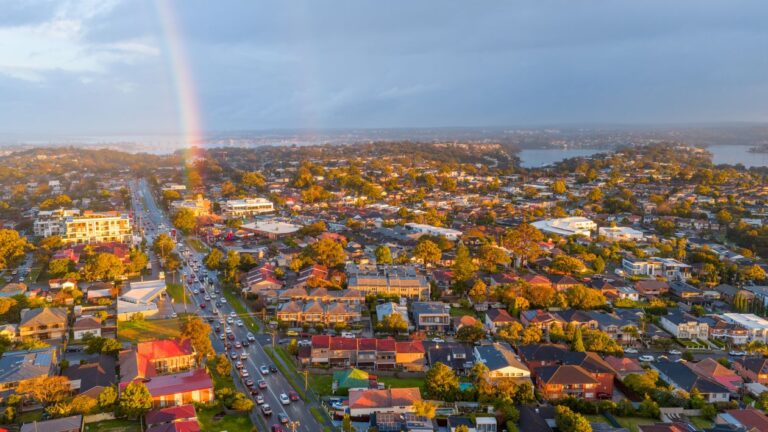
Hobart property investment in 2026 offers a compelling case for investors willing to look beyond the east coast majors. Tasmania’s capital has undergone a dramatic transformation over the past decade — from Australia’s most affordable capital city to one of its fastest-growing, driven by interstate migration, a booming tourism economy, and a chronic shortage of rental supply.
This guide covers the Hobart property market in 2026: the best suburbs, rental yields, price trends, and what investors need to know before buying.
Hobart Property Market Overview 2026
Hobart’s median house price sits around $680,000–$720,000 in mid-2026, having pulled back from the pandemic-era peak above $750,000 but stabilising well above pre-2020 levels. Units and townhouses are more accessible, with medians around $500,000–$540,000.
What makes Hobart distinctive as an investment market:
- Rental vacancy rate below 1%: Hobart consistently runs some of the lowest vacancy rates of any Australian capital. Supply has not kept pace with population growth.
- Strong interstate migration: Tasmanians returning and mainlanders relocating for lifestyle and affordability continue to support demand.
- Tourism underpinning Airbnb demand: MONA, Dark MOFO, and Cradle Mountain tourism keep short-term rental demand high in inner suburbs.
- Limited land supply: Hobart’s geography — surrounded by water, mountains, and national parks — constrains new housing supply in desirable locations.
Best Suburbs for Hobart Property Investment 2026
Sandy Bay
Hobart’s prestige suburb on the western shore of the Derwent River. Sandy Bay appeals to university-adjacent renters (UTAS is nearby) and lifestyle buyers. Gross yields are lower (3.5–4.2%) but capital growth has been consistent. Entry price: $850,000+ for houses.
Glenorchy
The most investor-friendly suburb in Greater Hobart for yield. Median house prices are around $480,000–$520,000 with gross yields of 5.0–5.8%. Glenorchy benefits from infrastructure investment, proximity to the CBD, and strong rental demand from essential workers. Best value for cash-flow investors.
Moonah
Adjacent to Glenorchy, Moonah is undergoing significant gentrification. Median prices around $530,000 with yields of 4.5–5.2%. The suburb has strong public transport links to the CBD and an increasingly diverse food and café scene attracting younger renters.
Kingston
Hobart’s fastest-growing outer suburb, Kingston sits 12km south of the CBD on the Channel Highway. New developments have increased housing supply but demand from families relocating from the mainland keeps vacancy low. Median house: $620,000. Yields: 4.2–4.8%.
Lindisfarne
An established middle-ring suburb on the eastern shore with water views and good school catchments. Attracts owner-occupiers and long-term tenants. Median: $680,000. Yields: 3.8–4.4%. Strong capital growth prospects.
New Town
Close to the CBD and hospitals, New Town has strong rental demand from healthcare workers and students. Median house: $680,000. Yields: 4.0–4.6%. Character homes on good blocks attract quality tenants.
Hobart Rental Yields 2026
Hobart offers some of the best rental yields of any Australian capital city:
- Houses: 4.0–5.8% gross (outer suburbs to inner)
- Units: 4.5–6.0% gross
- Net yields after management fees (typically 9–11% in Hobart), rates, and insurance: deduct 1.5–2.0 percentage points
Use our rental yield calculator to model your specific Hobart property’s cash flow after all costs.
Hobart Property Investment Risks
No investment market is without risk. Key considerations for Hobart:
- Single-economy dependency: Hobart’s economy is dominated by government, education, and tourism. A slowdown in any of these sectors — particularly tourism — can affect rental demand.
- Higher stamp duty: Tasmania’s stamp duty rates are mid-range but add to upfront acquisition costs. Budget approximately $24,000–$28,000 on a $650,000 purchase.
- Thin market liquidity: Hobart has fewer transactions than mainland capitals. When you need to sell, it can take longer to find a buyer at your target price.
- Property management quality: The property management industry in Hobart is smaller than the mainland. Choose your property manager carefully and review their tenant screening processes.
- Insurance premiums: Tasmania has higher building insurance costs in some areas due to heritage properties and bushfire risk in outer zones.
Understanding the 2026 negative gearing changes is also important for Hobart investors — the new rules affect established property purchases differently than new builds.
Is Hobart a Good Investment in 2026?
For investors prioritising yield and affordability, Hobart offers a genuine alternative to the east coast majors. The combination of sub-1% vacancy rates, strong gross yields in the 4.5–5.8% range, and an entry price point 30–40% below Sydney and Melbourne makes it attractive for investors who want cash-flow performance rather than speculation on capital growth.
The medium-term growth story remains intact — population is still growing, supply remains constrained, and interstate migration has not reversed. However, investors should model conservative assumptions and ensure the property cash-flows adequately at current interest rates without relying on capital growth to justify the purchase.
See how Hobart compares to other Australian markets in our best suburbs to invest in Australia guide.
Hobart vs Other Capital Cities for Investment
Comparing Hobart property investment to the other capitals:
- vs Sydney: Hobart is ~50% cheaper with higher gross yields. Sydney has greater liquidity and more robust long-term capital growth history.
- vs Melbourne: Similar yield profile with Melbourne, but Hobart has tighter vacancy and lower entry price.
- vs Brisbane: Brisbane offers similar entry prices in outer suburbs but stronger economic fundamentals and a larger rental pool.
- vs Perth: Perth 2026 is running hotter on price growth. Hobart is more stable and predictable. Different risk profiles.
- vs Adelaide: Both are strong yield markets. Adelaide has stronger population growth and a broader economic base.
For investors considering other markets, see our Adelaide property investment 2026 guide.
Financing a Hobart Investment Property
Lenders treat Hobart properties similarly to other capital cities, with standard LVR limits of 80% (or 90% with LMI). Some lenders apply additional scrutiny to:
- Heritage-listed properties in inner Hobart (renovation restrictions affect valuations)
- Properties in bushfire-affected zones
- Short-term rental / Airbnb properties (some lenders discount rental income)
See our guide to investment property loans Australia 2026 for current rate comparisons and borrowing capacity calculations.
FAQ: Hobart Property Investment 2026
Is Hobart a good place to invest in property?
Yes — for yield-focused investors. Hobart offers gross yields of 4.5–5.8% in outer suburbs, vacancy rates below 1%, and entry prices well below Sydney and Melbourne. The main risks are market liquidity and single-economy dependency.
What is the median house price in Hobart in 2026?
Approximately $680,000–$720,000 for houses and $500,000–$540,000 for units as of mid-2026.
Which suburb is best for property investment in Hobart?
Glenorchy and Moonah offer the best yield-to-price ratio for investors. Sandy Bay and Lindisfarne are better for long-term capital growth plays.
What rental yield can I expect in Hobart?
Gross yields range from 4.0% in prestige suburbs to 5.8% in outer suburbs. Net yields after costs are typically 2.5–4.0%.
Is it hard to find tenants in Hobart?
No — Hobart has one of Australia’s lowest rental vacancy rates (below 1%). Well-presented properties in good locations typically rent within 1–2 weeks.
One Property at a time
Brick by Brick 🧱
General Advice Warning: This article is general in nature and does not constitute personal financial advice. Please consult a licensed financial adviser before making investment decisions.