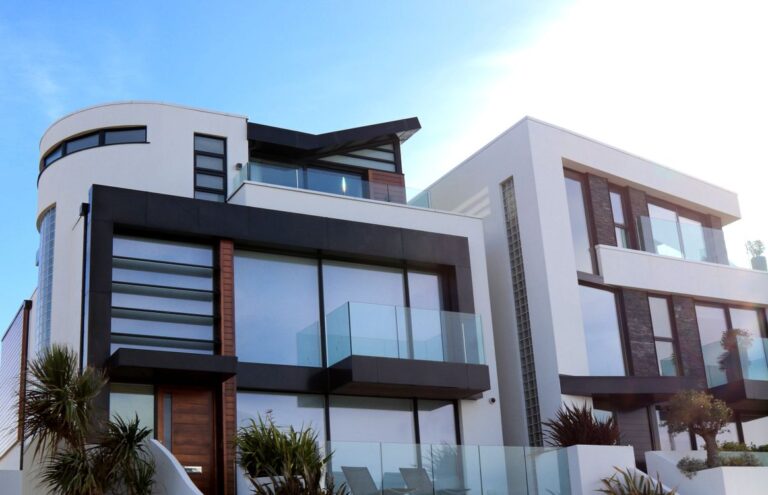

“Buy and hold” is the foundation of most successful property investment strategies in Australia — but how long is long enough? The answer depends on your goals, the market cycle, your tax position, and whether the property is still serving your portfolio well. This guide walks through the data on hold periods, when to sell, when to keep, and the key financial thresholds that matter.
The 10-Year Rule: Why It Keeps Coming Up
Research consistently shows that Australian residential property markets tend to double in value roughly every 10 years in major cities — though this varies significantly by market and time period. This “doubling decade” concept is the basis of the widely cited 10-year hold rule. The logic: short-term holds are expensive (stamp duty, agent fees, and CGT eat into gains), but over 10+ years, capital growth tends to absorb all transaction costs and deliver substantial net equity growth. Data from CoreLogic and ABS show that investors who held Sydney and Melbourne properties through any 10-year window from 1990 to 2020 made money — even those who bought at the top of a cycle.
The CGT 12-Month Threshold: Minimum Hold Period
The first hard rule: never sell before 12 months unless you have a compelling reason. Selling within 12 months of purchase means you pay Capital Gains Tax on the full nominal gain at your marginal income tax rate — potentially 45% for high earners. Hold for 12 months and you qualify for the 50% CGT discount, halving the taxable gain. On a $100,000 capital gain, that difference is $22,500 in extra tax for a 45% marginal rate taxpayer. The 12-month mark is the absolute minimum hold period for any investment property purchase.
Transaction Costs: Why Short Holds Are Expensive
Every time you buy and sell property, you pay: stamp duty (3–5% of purchase price in most states), legal/conveyancing costs (~$2,000–$3,000 each way), agent selling fees (1.5–2.5% of sale price), and potential mortgage break costs if you’re on fixed rates. On a $600,000 property, entry and exit costs alone can total $35,000–$50,000. For the property to cover those costs, it needs to grow by at least that amount. Historically, this takes 2–3 years in a strong market — longer in flat conditions. Short-term property “flipping” works only in rapidly rising markets, and most investors overestimate their ability to pick those windows.
Equity Accumulation: The Compounding Case for Long Holds
Property wealth is built through compounding equity, not through trading. Consider: a $500,000 property bought in 2015 that has grown to $900,000 by 2025 has created $400,000 in equity — which can be accessed via a line of credit to fund a second property purchase, effectively doubling your asset base without selling. This equity recycling strategy is how most successful Australian property investors build a portfolio without needing fresh capital each time. Selling the first property to buy the second is generally inferior — you pay transaction costs and CGT, and lose the first property’s future growth and income.
When Does it Make Sense to Sell?
Long holding is the default, but there are legitimate reasons to sell: (1) The property has become structurally flawed — major capital works needed, ongoing flooding, or sustained vacancy that can’t be resolved. (2) Portfolio rebalancing — you’ve concentrated too much equity in one lower-growth asset and want to redeploy into better markets. (3) Life circumstances — retirement, health, or family reasons that require liquidity. (4) The market has run far ahead of fundamentals — rental yields have compressed below 3% and you believe the market is overpriced relative to your alternative opportunities. (5) Debt serviceability is under severe pressure and you cannot hold through a correction. These are valid — emotional discomfort with paper losses or media noise are not.
The Optimal Hold Period: What Successful Investors Do
Studies of high-net-worth Australian property investors consistently show they hold quality assets for 10–20+ years. The properties that generate life-changing wealth aren’t the ones bought and flipped — they’re the ones bought in the right location and held through multiple cycles. Each cycle (typically 7–10 years in Australian markets) delivers another round of capital growth. An investor who bought a modest property in an inner-Melbourne suburb in 1995 for $180,000 and held it is now sitting on an asset worth $1.2M–$1.5M — with a paid-down or zero mortgage. That’s the compounding power of patience and time in market.
The investors who build real wealth from property aren’t the ones who trade the most — they’re the ones who buy well, hold patiently, and let time and compounding do the heavy lifting. Every year you hold a quality asset, the transaction costs become less relevant and the equity becomes more powerful.
One Property at a time
Brick by Brick 🧱
General Advice Warning: This article is general in nature and does not constitute personal financial advice. Please consult a licensed financial adviser before making investment decisions.