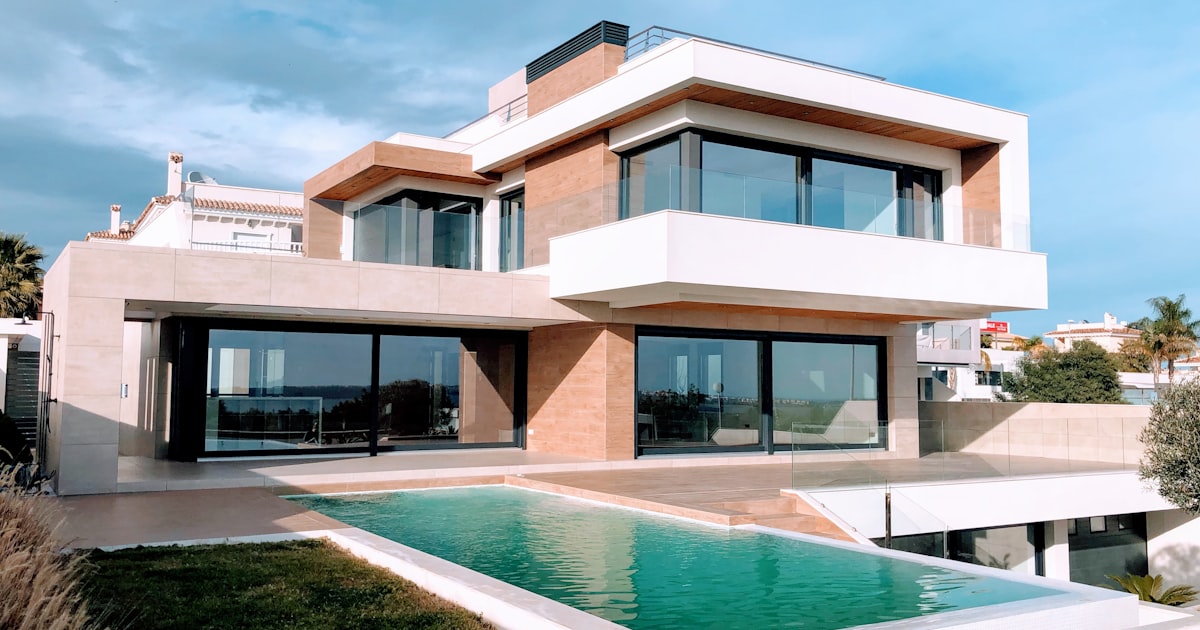

Dual occupancy property investment in Australia allows investors to generate two rental income streams from a single block of land. A dual occupancy development places two dwellings on one lot — either attached (duplex) or detached (two separate structures). The strategy can dramatically improve a site’s yield and capital value, but it requires careful attention to council zoning, development approval, construction costs, and the exit strategy (keep both on one title or subdivide).
Types of Dual Occupancy
Attached dual occupancy (duplex): Two dwellings sharing a common wall, typically side by side. More common in established suburban lots where both dwellings face the street. Lower construction cost per dwelling than detached. Detached dual occupancy: Two completely separate dwellings on one lot — often a traditional house at the front and a secondary dwelling (granny flat scale or larger) at the rear. More flexible in design but requires a larger lot. Torrens title subdivision: After construction, the lot can sometimes be subdivided into two separate freehold titles — enabling the investor to sell one dwelling and retain one, or sell both independently at a combined value often exceeding the single-site dual occupancy value.
Dual Occupancy Investment — Return Profile
Dual occupancy can deliver exceptional yields and capital value, but requires the right zoning, a large enough lot, council DA approval, and a reliable builder. The subdivision exit strategy (two separate titles) often unlocks the maximum value — research whether Torrens subdivision is achievable on your target site before purchasing the land.
Zoning and Lot Size Requirements
Dual occupancy is not permitted on every residential block. Requirements vary by state and council. In NSW: dual occupancy is permitted in R1 General Residential, R2 Low Density Residential, R3 Medium Density, and R4 High Density zones (check your specific council’s LEP). Minimum lot size for a Torrens-subdivided duplex is typically 400-600 sqm per resulting lot (so 800-1,200 sqm total for a traditional duplex). Some councils have minimum frontage requirements (typically 12-15m+ per lot post-subdivision). In Queensland: zoning classifications vary by council — always check the local planning scheme. Victoria: ResCode provisions and planning permit requirements apply.
The Subdivision Exit Strategy
The most powerful dual occupancy strategy combines development with subdivision. Once two dwellings are constructed on one lot, the investor applies for Torrens title subdivision — splitting the lot into two freehold titles. Once separate titles are created, each dwelling can be sold independently. In many markets, two separately-titled dwellings on two lots are worth materially more than one dual occupancy on a single title. The profit margin on a well-executed duplex subdivision can be $100,000-$300,000+ in growth markets. This is why experienced property developers focus heavily on dual occupancy and subdivision in outer Sydney, Brisbane, and Melbourne growth corridors.
Dual occupancy is one of Australia’s highest-yield property development strategies — but it is a development strategy, not a passive investment. It requires finding the right site, navigating development approval, managing construction, and executing an exit strategy. When done well, the returns are exceptional. When done without adequate due diligence on zoning, council requirements, and construction cost, it is an expensive lesson in the complexity of residential development.
One Property at a time
Brick by Brick 🧱
General Advice Warning: This article is general in nature and does not constitute personal financial advice. Please consult a licensed financial adviser before making investment decisions.